

From Wigram Aerodrome to The Landing: A Place Shaped by Aviation
The Landing Wigram may be known today for its cafés, restaurants, shops and everyday services, but the story beneath this town centre reaches back to the earliest days of New Zealand aviation.
Long before The Runway became Wigram’s main shopping street, aircraft were taking off from this land. Pilots trained here, pioneering airmail flights departed from here and generations of Royal New Zealand Air Force personnel built their careers here.
When Wigram Skies was later developed, that history was not forgotten. It became part of the new community’s streets, buildings and identity.
The Beginnings of Aviation at Wigram
Christchurch businessman and politician Henry Francis Wigram recognised the potential of aviation at a time when powered flight was still new. He helped establish the Canterbury Aviation Company and its private flying school at Sockburn in 1916.
New Zealand did not yet have an air force, so the school played an important role in training pilots for service during the First World War. It also helped establish Canterbury as a centre of early aviation knowledge and expertise.
The site was more than a training ground. The Canterbury Aviation Company explored how aircraft could connect New Zealand communities and support commercial services during peacetime.
New Zealand’s First Regular Airmail Service
One of Wigram’s most remarkable chapters began on 31 January 1921.
Captain Euan Dickson left Christchurch at 8am in an Avro 504K carrying several hundred letters south to Ashburton and Timaru. The aircraft flew into a strong south-westerly, beginning what is recognised as New Zealand’s first regular airmail service.
The service lasted only a few months because it did not attract enough business to remain profitable. Even so, it demonstrated the ambition of the Canterbury Aviation Company and showed how aviation could reduce the distance between New Zealand towns.
In 1923, the New Zealand Government purchased the company’s land and assets. Henry Wigram contributed £10,000 towards the transfer, and the airfield was renamed Wigram in recognition of his contribution to New Zealand aviation.
Wigram’s Royal New Zealand Air Force Years
Wigram became closely associated with military flying and aviation training. It served as the RNZAF’s principal training base for decades, shaping the careers of pilots, navigators, engineers and other Air Force personnel.
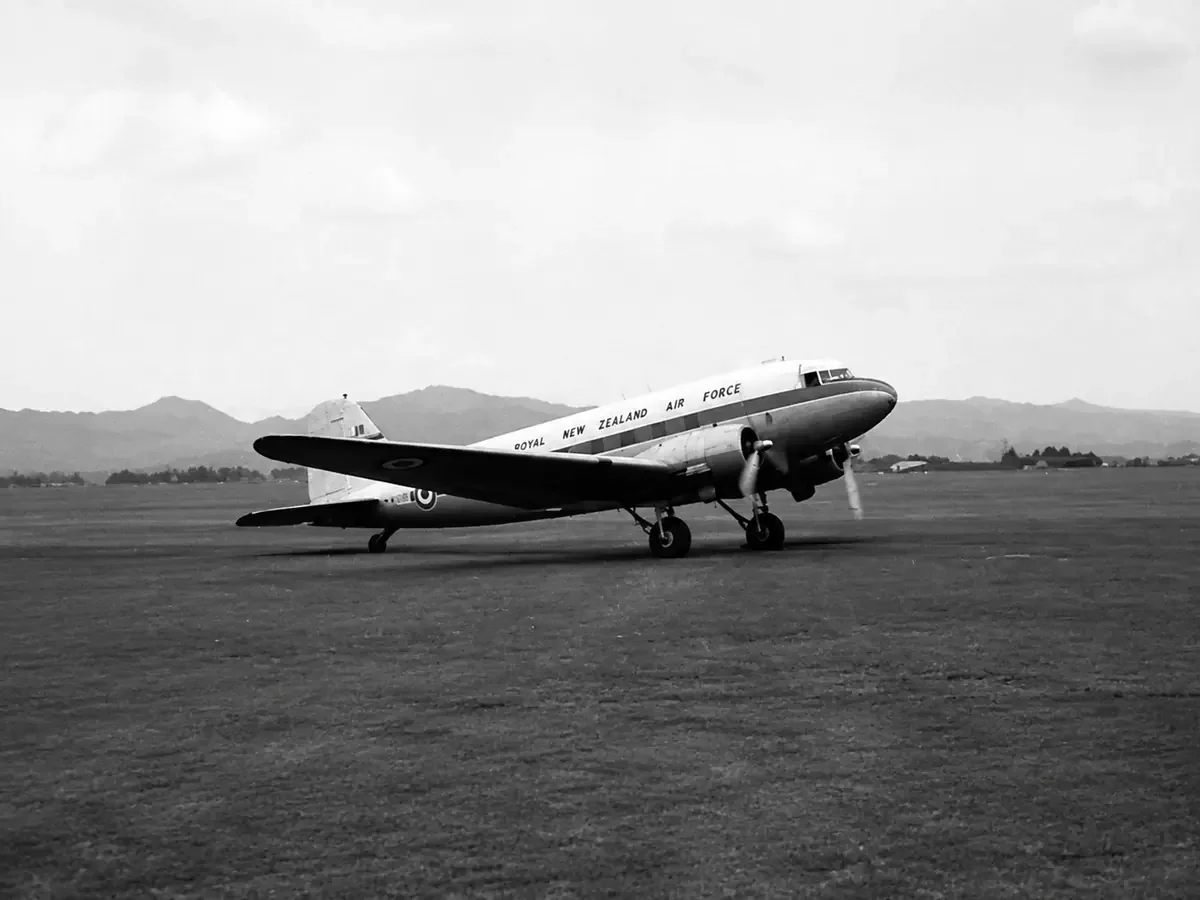
A Base That Trained Generations
After becoming a military airbase, Wigram developed into one of New Zealand’s most important aviation centres.
For decades, aircraft took off from these grounds while pilots, navigators, engineers and ground crews completed their training. The familiar sound of aircraft became part of everyday life in south-west Christchurch and helped shape Wigram’s identity.
The aerodrome also witnessed major moments in aviation history.
In September 1928, Sir Charles Kingsford Smith and the crew of the Southern Cross completed the first successful trans-Tasman flight to New Zealand, landing at Wigram after flying from Sydney.
Air displays, training flights and the everyday activity of the base made aircraft a familiar part of life in south-west Christchurch.
That legacy remains visible at the nearby Air Force Museum of New Zealand, in surviving historic buildings and throughout Wigram’s aviation-themed street names.
From Wigram Aerodrome to Wigram Skies
Ngāi Tahu Property purchased the Wigram Aerodrome site in 1997 with a long-term plan to create a sustainable, master-planned community.
Flying at the historic aerodrome officially ended in 2009, marking the close of one era and the beginning of another.
Wigram Skies grew into a substantial new neighbourhood with homes, parks, a school and community facilities. Rather than erasing the character of the former airfield, the development retained strong connections to it.
Names such as Corsair Drive, Kittyhawk Avenue and Skyhawk Road continue the aviation theme, while The Runway follows the alignment and memory of the former aerodrome.
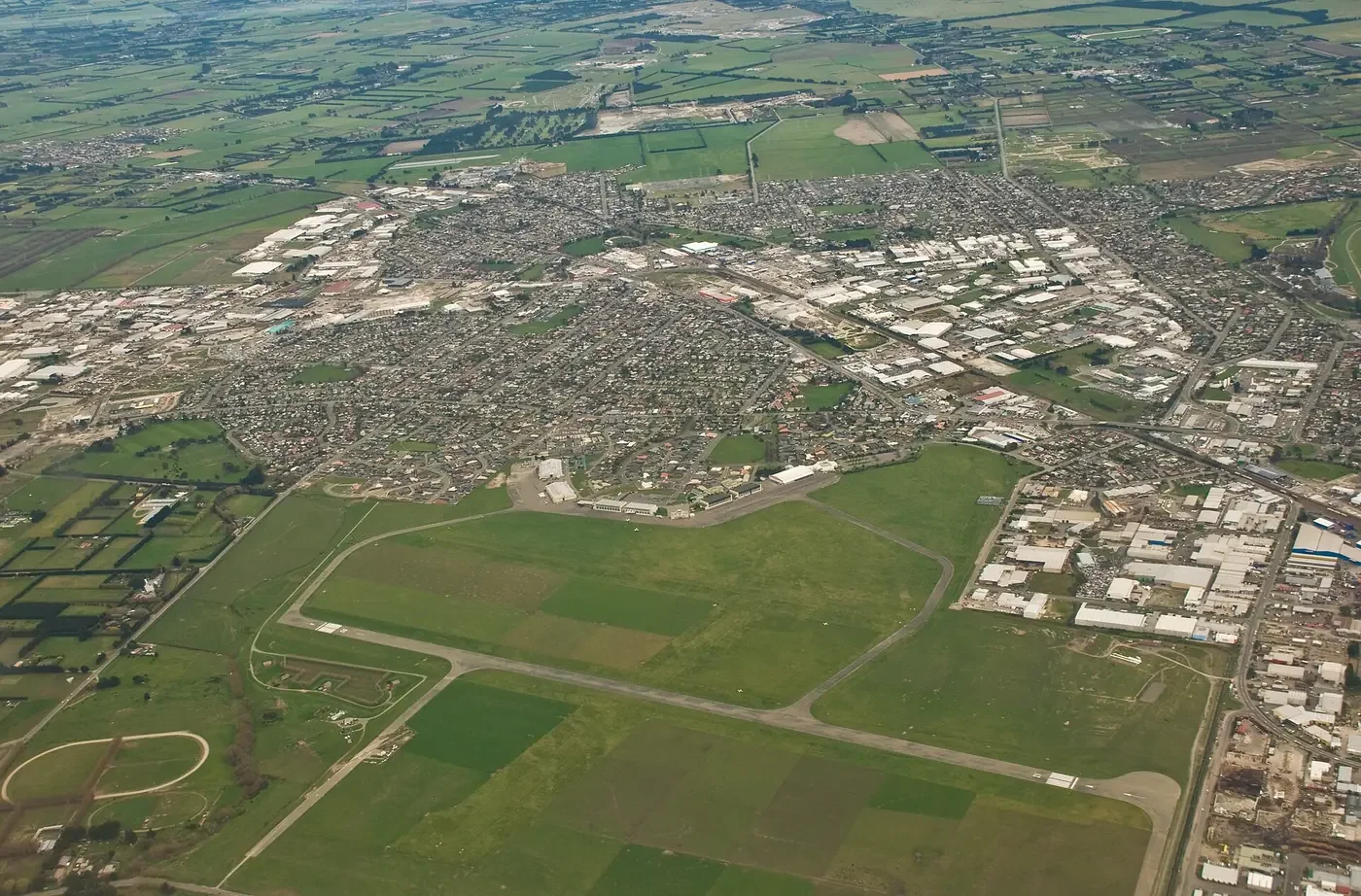
The Airfield Before Wigram Skies
Taken in 2008, this aerial view captures Wigram Aerodrome shortly before its official closure.
The former runway and open airfield can still be clearly seen. As Wigram Skies developed, this landscape was transformed into a new neighbourhood while its aviation history remained part of the streets, buildings and identity of the area.
How Aviation Inspired The Landing’s Design
The Landing was planned as the town centre at the heart of Wigram Skies—a place where residents and visitors could shop, eat, work and meet.
Its design deliberately draws on the aeronautical history of the former Wigram Aerodrome, together with Māori design influences connected with developer Ngāi Tahu Property.
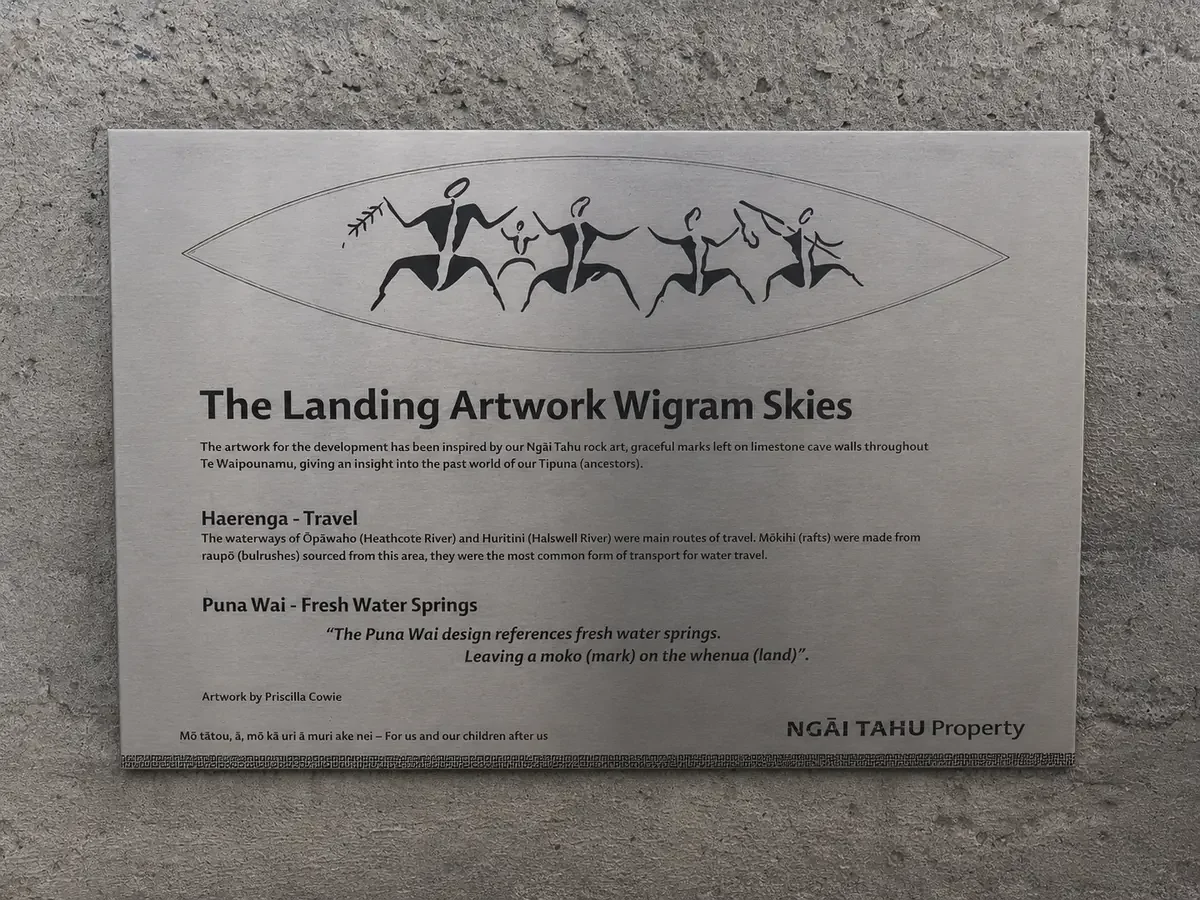
Artwork Inspired by the Land
The design of The Landing also reflects stories connected to the land and its earliest travellers.
Artwork created for the development was inspired by Ngāi Tahu rock art found on limestone cave walls throughout Te Waipounamu. These graceful markings provide a connection to the world of tīpuna and have helped shape a distinctive identity for Wigram Skies.
The artwork references haerenga, or travel, recalling how the nearby Ōpāwaho and Huritini waterways were once important routes. It also draws on puna wai, the freshwater springs connected with this landscape.
Created by artist Priscilla Cowie, the artwork adds another layer to The Landing’s story—recognising that the history of this place reaches much further back than the former aerodrome.
Architecture practice Buchan designed key retail and office buildings as a low-rise, pedestrian-friendly town centre. Working with Kamo Marsh Landscape Architects, the designers created two defining public features: the town square and The Runway.
The Runway is more than a convenient road through the centre. Its name recalls the land’s former purpose, while the continuous folded roofline changes height along the street.
These angular buildings subtly suggest aircraft wings, hangars and movement, giving The Landing a character that feels distinctly connected to Wigram.
Warm materials, native planting and welcoming public spaces help make the centre feel part of its surroundings rather than like a generic shopping complex.
The result is a modern town centre whose identity has grown from the history of the land beneath it.
The Meaning Behind The Landing’s Name
The name The Landing creates a direct connection between the area’s aviation past and its modern purpose.
Aircraft once landed at Wigram after training flights, long journeys and historic aviation achievements. Today, The Landing is a different kind of destination—a place where the local community can arrive, meet, eat, shop and spend time.
The name gives the centre a memorable identity while recognising the generations of people whose work helped make Wigram an important part of New Zealand’s aviation story.
A Living Part of Wigram’s Story
Today, The Landing brings together dining, shopping, health, beauty, professional services and community facilities in an open-air setting.
The aircraft may be gone from The Runway, but Wigram’s aviation story remains present in the names, architecture and character of the centre.
That connection between past and present is what makes The Landing distinctive. It is not simply a collection of businesses. It is a meeting place built around a history of training, travel, innovation and community.
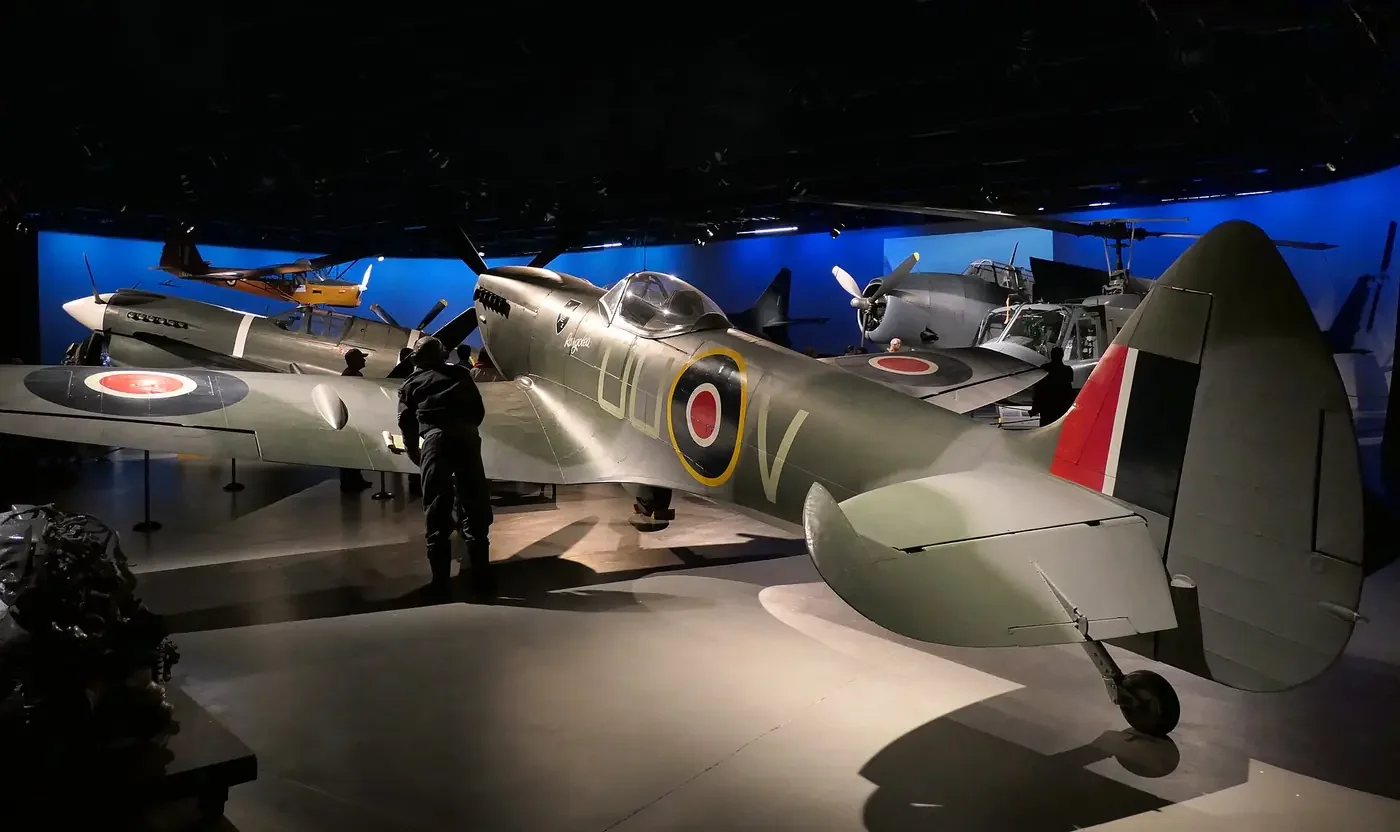
Keeping Wigram’s Aviation Story Alive
The nearby Air Force Museum of New Zealand preserves the aircraft, objects and personal stories connected with Wigram’s military aviation history.
Located on the former airbase, the museum ensures that Wigram’s contribution to New Zealand aviation continues to be remembered and shared with future generations.
Image Credits and Licences
Historical photographs used in this article have been resized and compressed for web display.
Canterbury Aviation Company’s airmail service, 1920s — Archives New Zealand via Wikimedia Commons. Licensed under CC BY 2.0.
Wigram air display, Christchurch, 1967 — Wilford Peloquin via Wikimedia Commons. Licensed under CC BY 2.0.
Wigram Airfield, Christchurch, 2 September 2008 — Phillip Capper via Wikimedia Commons. Licensed under CC BY 2.0.
Air Force Museum of New Zealand, Wigram — Bernard Spragg NZ via Wikimedia Commons. Released into the public domain by the photographer.
.jpg)
.jpg)

.jpg)